

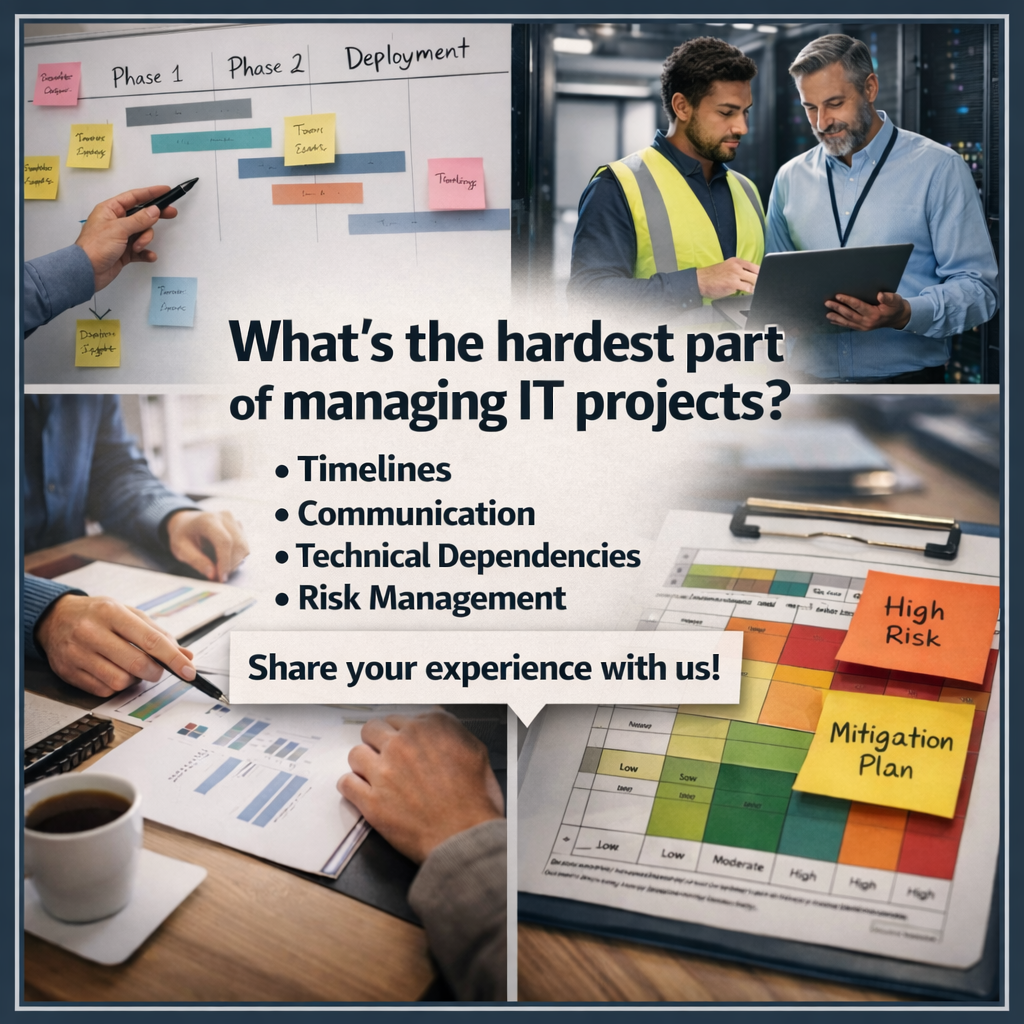
IT projects often look straightforward on paper.
You define the scope, assign responsibilities, set a timeline—and everything should fall into place. But anyone who has worked on real-world IT projects knows it’s rarely that simple.
Delays happen. Priorities shift. Unexpected technical challenges surface.
The reality is that successful IT project management isn’t about avoiding problems—it’s about navigating them effectively.
The Reality Behind IT Project Challenges
Every IT project involves multiple moving parts: people, systems, timelines, and dependencies. When even one of these elements falls out of sync, it can impact the entire project.
While every organization is different, a few common challenges tend to show up consistently.
1. Timelines: Balancing Speed and Reality

Deadlines are often set with the best intentions—but not always with full visibility.
Unexpected issues like hardware delays, system incompatibilities, or shifting priorities can quickly derail even the most carefully planned timeline.
The challenge isn’t just creating a timeline—it’s creating one that can adapt when things don’t go exactly as planned.
2. Communication: Keeping Everyone Aligned

Communication is one of the most underestimated factors in IT project success.
When teams aren’t aligned, small misunderstandings can turn into major setbacks:
- Missed expectations
- Duplicate work
- Delayed decision-making
Clear, consistent communication across teams—technical and non-technical—is critical to keeping projects on track.
3. Technical Dependencies: The Hidden Complexity

IT environments are rarely isolated.
Systems depend on other systems. Updates rely on compatibility. Infrastructure changes can impact multiple layers at once.
These dependencies aren’t always visible upfront, which makes them one of the most difficult aspects to manage.
A single overlooked dependency can delay an entire project.
4. Risk management: Preparing for the unexpected
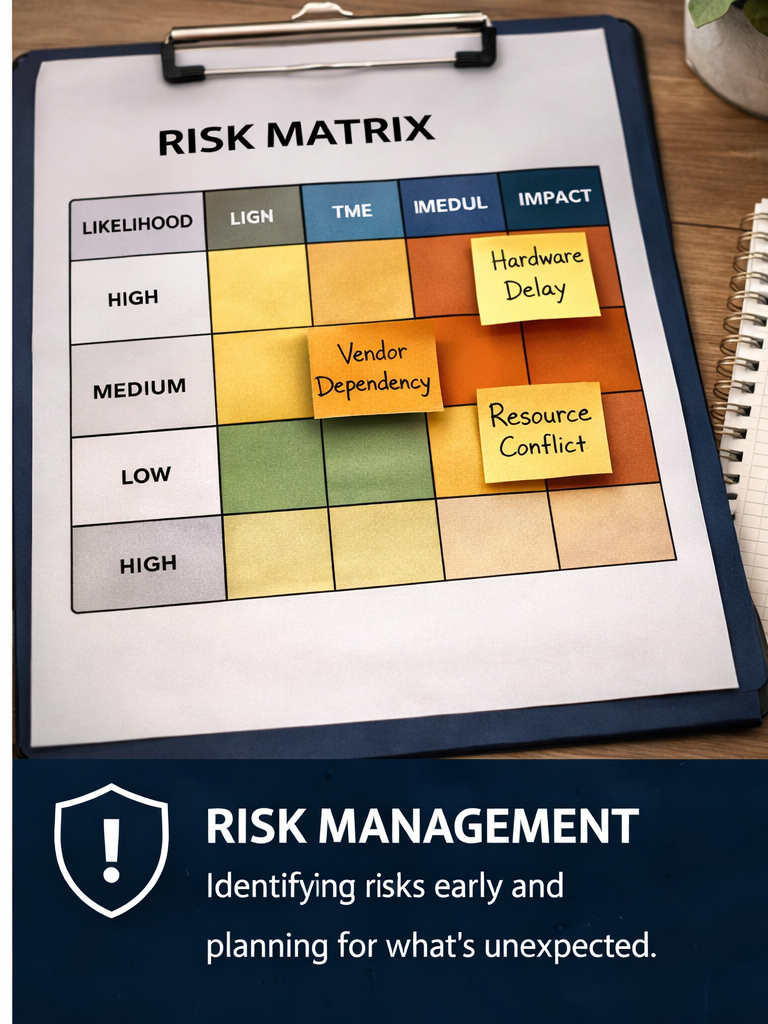
Every IT project carries some level of risk.
The key isn’t eliminating risk—it’s identifying and managing it early.
This includes:
- Anticipating potential points of failure
- Creating contingency plans
- Staying flexible when conditions change
Teams that actively manage risk are far more likely to deliver successful outcomes.
Bringing It All Together
There’s no single “hardest” part of managing IT projects.
Success usually depends on how well teams can balance:
- Realistic timelines
- Strong communication
- Awareness of technical dependencies
- Proactive risk management
Each project presents its own challenges—and its own opportunities to improve.
Let’s Open the Conversation
What’s been the hardest part of managing IT projects in your experience?
- Timelines
- Communication
- Technical dependencies
- Risk management
Every perspective is different, and sharing those experiences helps everyone improve.