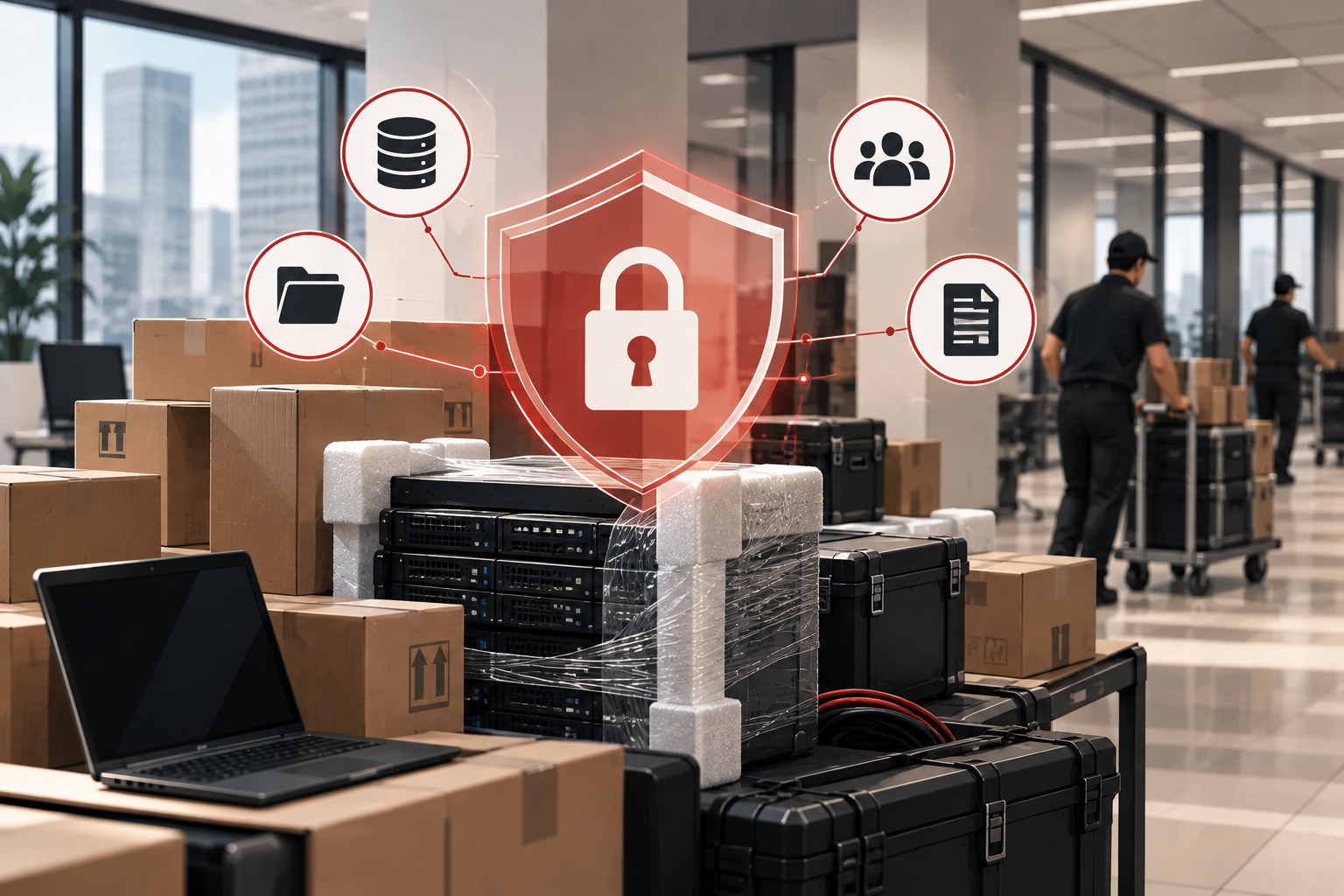
How Secure IT Handling During Relocations Protects Your Data
An office or data center relocation involves much more than moving desks, monitors, and servers from one location to another. Every device being transported may contain sensitive company information, employee data, customer records, credentials, or access to critical systems.
That makes secure IT handling an important part of any relocation plan.
At Murphy McKay & Associates, we approach IT relocations with security and accountability in mind from the moment equipment is disconnected until it is safely installed at the new location.
Why IT Relocations Create Security Risk
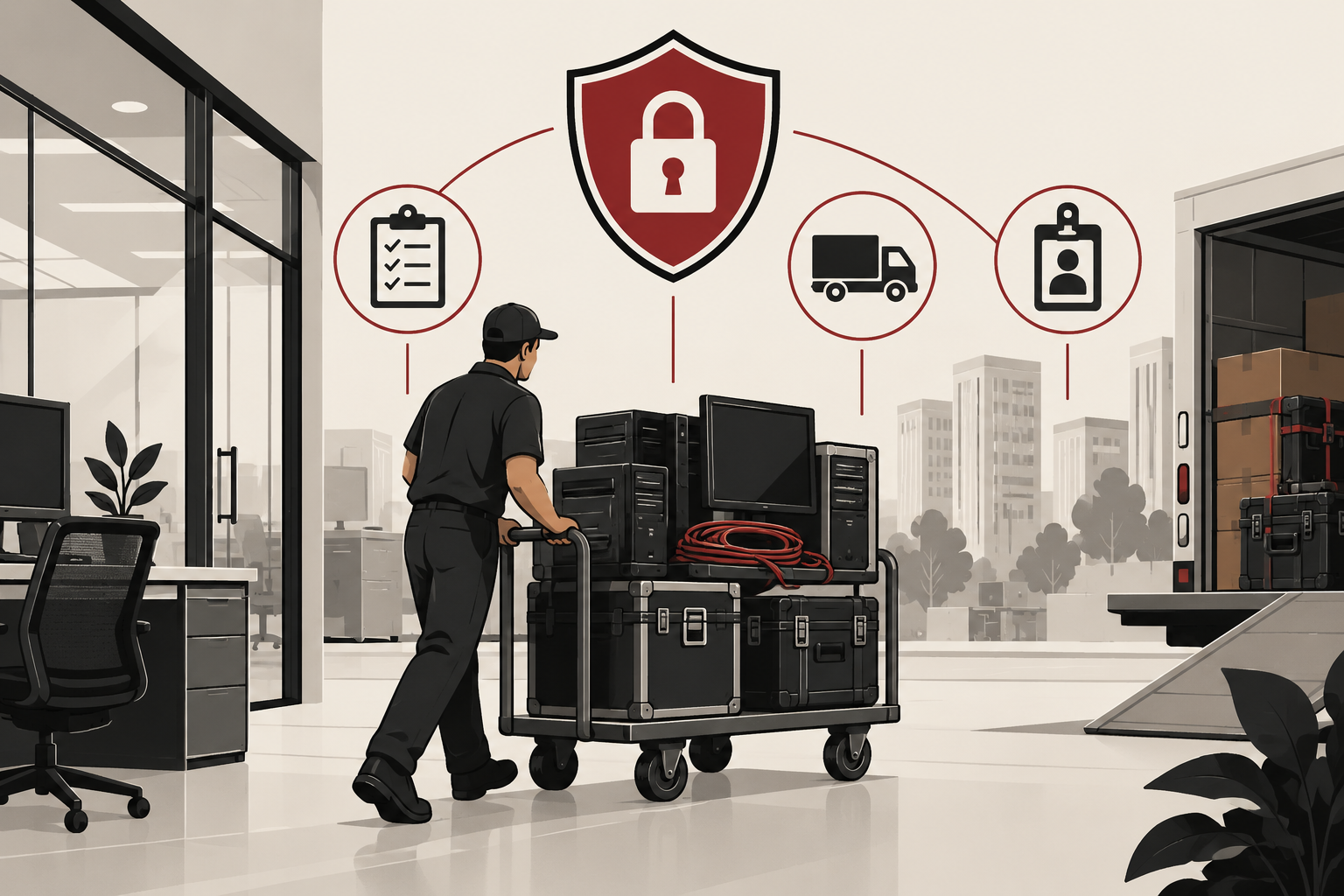
During a move, equipment temporarily leaves its normal controlled environment. Computers, servers, storage devices, networking equipment, and other assets may pass through several hands before arriving at their destination.
Without proper procedures, organizations can face risks such as misplaced equipment, unauthorized access, damaged devices, or uncertainty about who handled an asset during the move.
A structured relocation process helps reduce those risks.
Chain-of-Custody Documentation
One of the most important parts of a secure IT move is knowing where equipment is at every stage of the relocation.
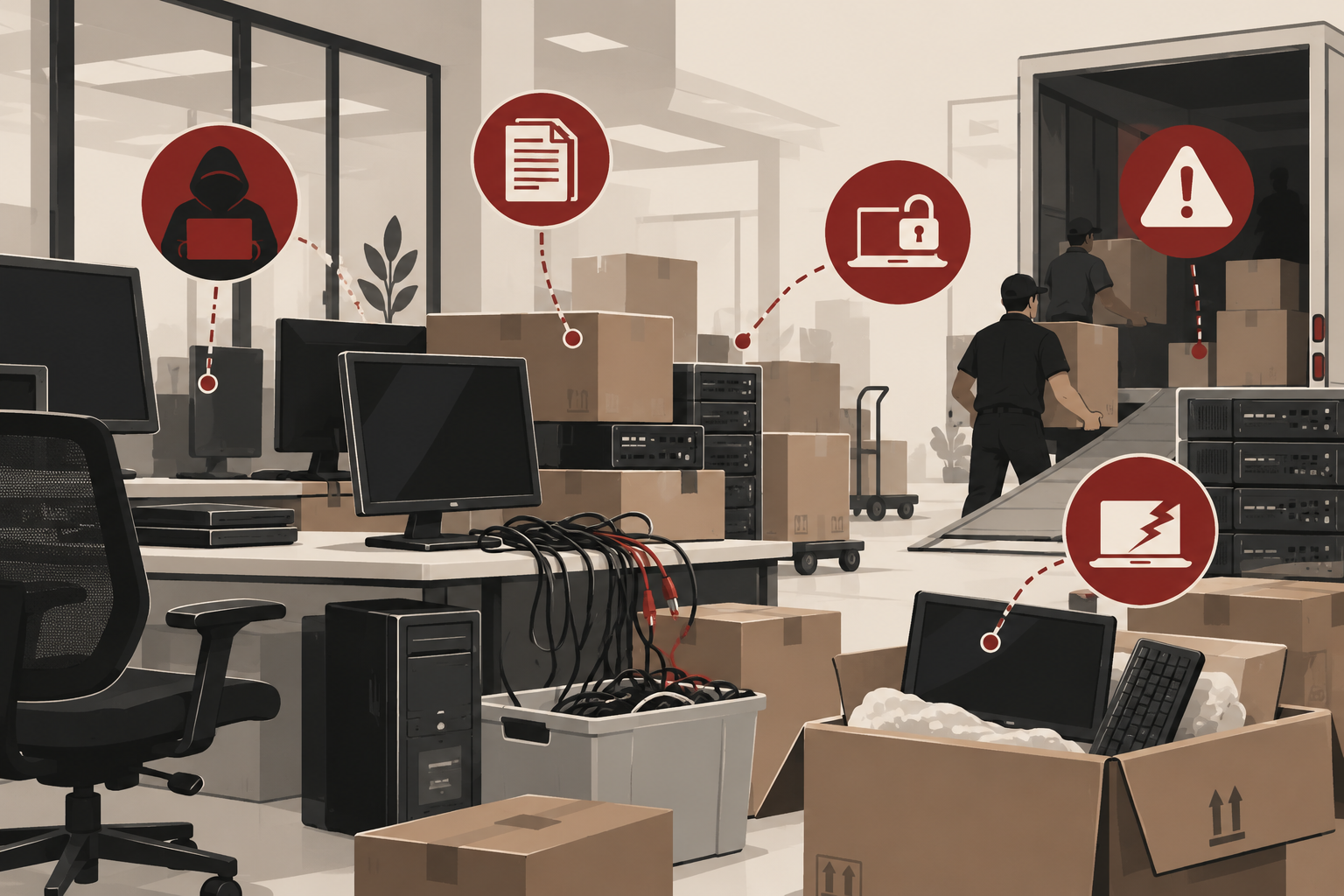
Chain-of-custody procedures help document equipment as it is disconnected, packed, transported, delivered, and reinstalled. Asset labels, inventories, checklists, and handoff documentation create accountability throughout the process.
If a device needs to be located or verified, the project team has a clear record of where it belongs and who handled it.
Secure Handling and Transport
IT equipment requires more care than standard office furniture.
Monitors, workstations, servers, network appliances, and other technology should be properly packed, labeled, organized, and transported to reduce the possibility of damage or loss.
Secure handling also means preventing equipment from being left unattended or placed in unsecured areas during staging and transportation.
The goal is simple: every device that leaves the original location should arrive safely and securely at the new one.
Controlled Access
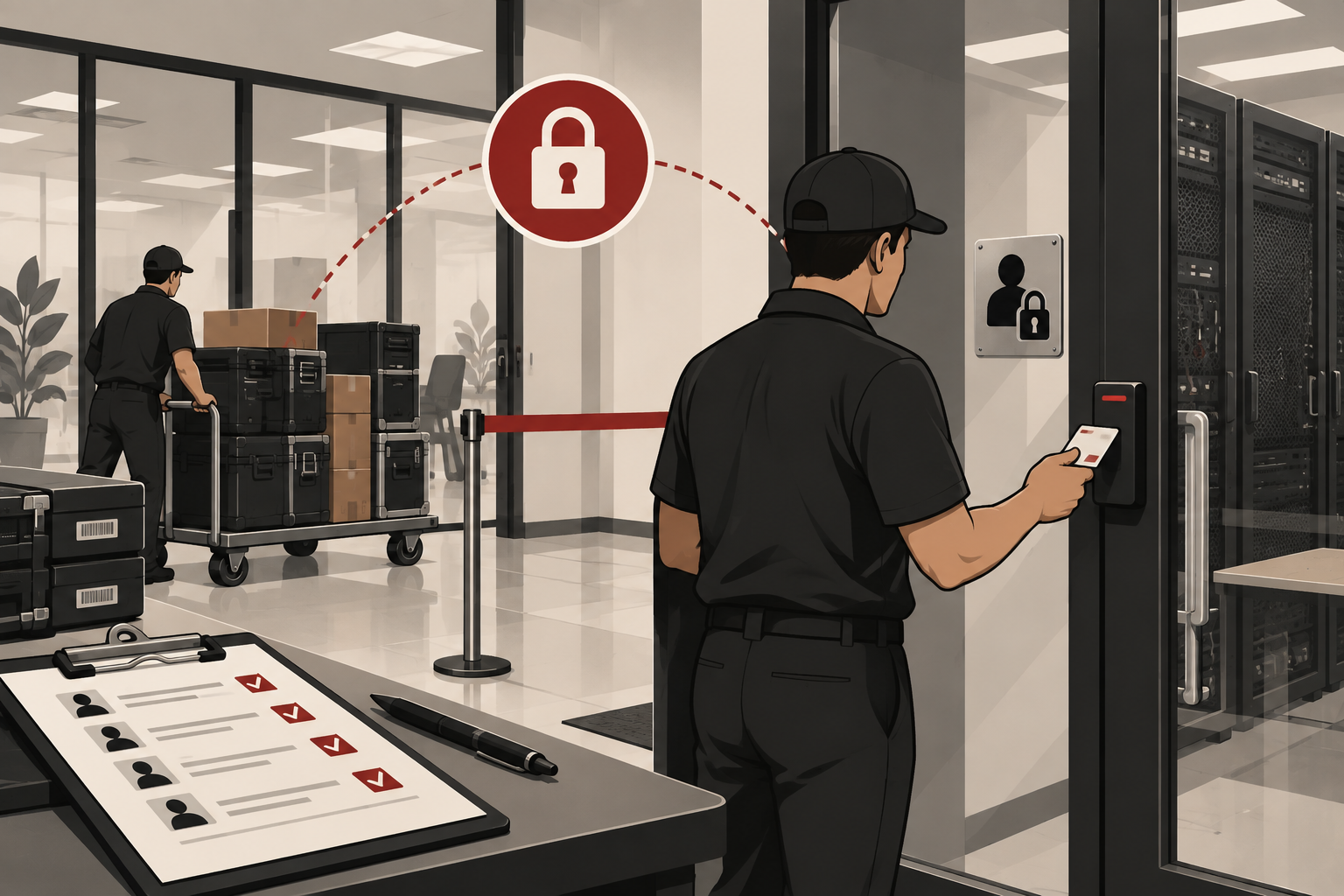
Not everyone involved in an office relocation needs access to IT equipment.
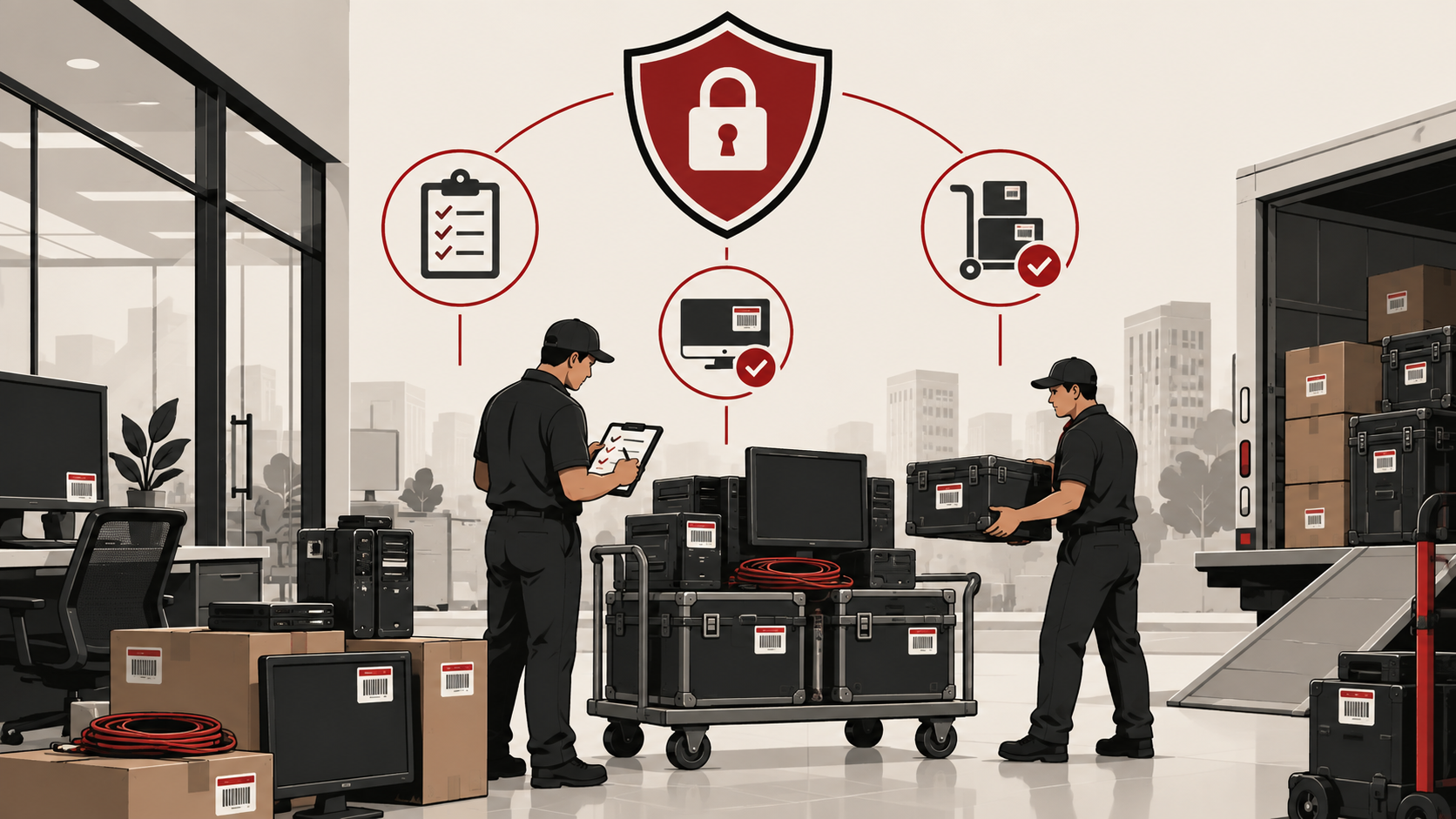
Limiting access to authorized personnel helps protect sensitive assets and reduces unnecessary handling. Clearly defined responsibilities also make it easier to maintain accountability throughout the project.
This becomes especially important when relocating equipment that contains confidential information or provides access to company networks and systems.
Security Should Be Part of the Move Plan
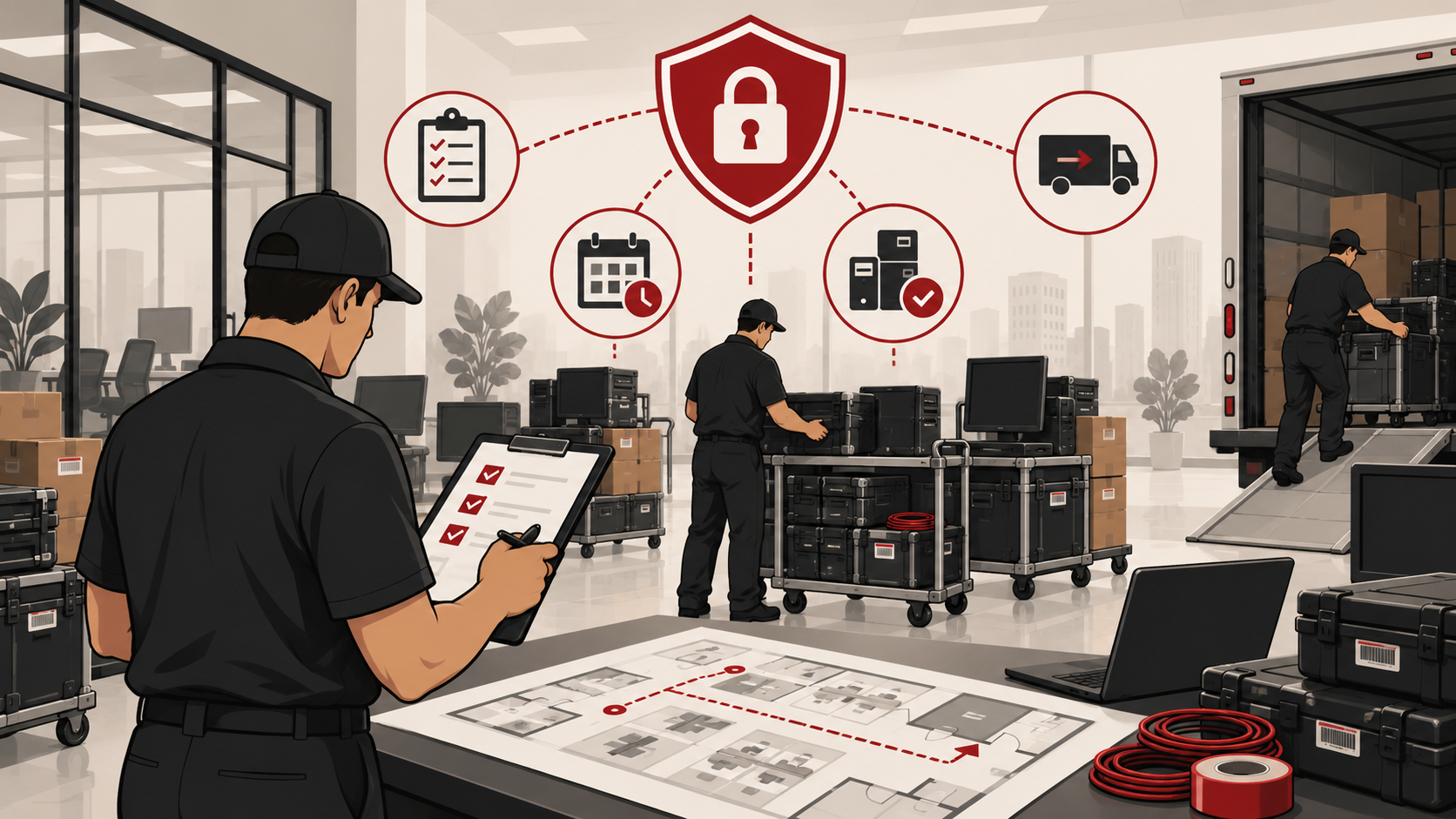
Security should not be something added at the last minute. It should be incorporated into the relocation plan alongside scheduling, transportation, installation, testing, and cutover procedures.
A well-organized IT relocation can include:
• Asset inventories and labeling
• Chain-of-custody documentation
• Secure packing and transportation
• Controlled access to equipment
• Defined handoff procedures
• After-hours or coordinated cutovers
• Equipment verification at the destination
• Testing before employees return to work
When these steps are planned in advance, businesses can reduce risk while keeping the relocation organized and efficient.
Protecting More Than Equipment
The physical equipment may be what gets moved, but the information stored on that equipment can be far more valuable.
A secure relocation process helps protect company data while maintaining accountability, reducing downtime, and giving organizations confidence that their technology is being handled properly throughout the transition.
At Murphy McKay & Associates, our team helps businesses plan and execute IT relocations with security, organization, and business continuity in mind.
Planning an upcoming office or IT relocation? Contact Murphy McKay & Associates to discuss how we can help protect your technology throughout the move.